
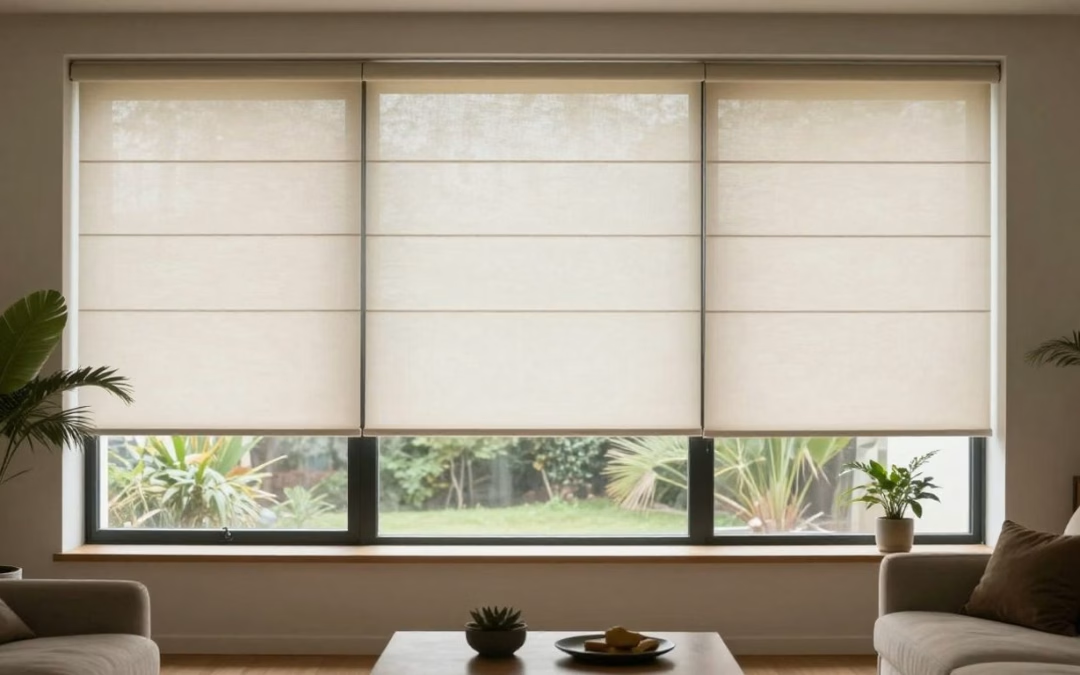
Getting the right blinds for your home is about more than just looks; it’s about function and budget. Here are the main points to remember when looking at custom canvas blinds prices in South Africa.
Key Takeaways
- The price of custom blinds in South Africa depends a lot on the type of blind, its size, the material used, and if you want it motorised.
- Made-to-measure blinds cost more upfront but fit perfectly, look better, and can save money in the long run by improving insulation.
- Outdoor blinds for patios and entertainment areas have different pricing, often higher due to size and weather-resistant materials.
- Always check if prices include VAT and delivery fees, as these can add to the final cost. Some suppliers offer free delivery.
- Comparing prices from different suppliers and understanding the value beyond the initial cost will help you get the best deal for your needs.
Understanding Custom Canvas Blinds Price in South Africa
Factors Influencing Custom Blind Costs
So, you’re looking into custom canvas blinds in South Africa and wondering about the price tag. It’s not just a simple number, you know? Several things play a role in how much you’ll end up paying. Think about the size of your windows first – bigger windows obviously need more material, which bumps up the cost. Then there’s the type of fabric you choose. Some are more basic, while others might have special features like UV protection or water resistance, and those usually cost a bit more. Don’t forget about the hardware, like the poles or tracks; better quality stuff lasts longer but also costs more upfront. And if you’re thinking about adding any fancy extras, like a specific type of pull cord or a decorative trim, that’ll add to the total too.
- Window Dimensions: The width and drop of your window are the biggest factors.
- Fabric Type: Basic canvas versus specialised, weather-resistant materials.
- Hardware Quality: Standard vs. premium mechanisms and finishes.
- Additional Features: Motorisation, decorative trims, or specific operating systems.
The price you see isn’t just for the material; it’s for a product made precisely for your space, designed to fit perfectly and function well for years to come.
The Value of Made-to-Measure Blinds
When you get custom blinds, you’re not just buying a window covering; you’re investing in something that’s made specifically for your home. Unlike off-the-shelf options, made-to-measure blinds fit your windows exactly. This means no awkward gaps where light can sneak in, and they look a whole lot neater. Plus, a perfect fit often means better insulation, helping to keep your home cooler in summer and warmer in winter. This can actually save you money on your energy bills over time. It’s about getting a product that works better and looks great, tailored just for you. For example, getting the right fit for your patio can make a huge difference in usability, and Custom Blinds offers affordable outdoor blinds that are made to your exact specifications.
Transparent Pricing for South African Consumers
It can be frustrating when you can’t get a clear price for something without a lot of back-and-forth. Thankfully, more companies in South Africa are moving towards transparent pricing. This means you can often get an instant quote online just by entering your window measurements and choosing your blind type. No more waiting for a salesperson to call you back or dealing with hidden fees. Knowing the exact price upfront helps you budget properly and compare different options without any guesswork. It makes the whole process much simpler and less stressful. You can often find this kind of clear pricing on websites that let you build your own quote, seeing the total cost as you make your selections. This approach really helps consumers feel more in control of their purchase.
Pricing Breakdown by Blind Type
When you’re looking at custom blinds, the price tag can really change depending on what kind of blind you’re after. It’s not just about the size; the materials and how they’re built play a big role. Let’s break down some of the most common types you’ll find in South Africa.
Roller Blinds: Affordability and Versatility
Roller blinds are often the go-to for many homeowners, and for good reason. They’re pretty straightforward, which usually means they’re easier on the wallet. You can get them in all sorts of fabrics, from sheer ones that let in a bit of light to totally blockout materials perfect for bedrooms or media rooms. The price really depends on the fabric you choose and the size of your window.
- Sheer Roller Blinds: These are great for living areas where you want to cut down glare but still let in some natural light. They tend to be on the lower end of the price scale.
- Blockout Roller Blinds: If you need darkness, these are your best bet. They’re a bit more expensive than sheer ones because of the denser fabric, but they offer great light control.
- Motorised Options: Like most blinds, you can add a motor to roller blinds. This bumps up the cost, but it’s super convenient, especially for hard-to-reach windows.
Generally, you’re looking at a range of R800 to R3,700 for a made-to-measure roller blind, depending on the specifics. You can find some basic options starting around R539 for sheer and R737 for blockout, including VAT and delivery, which is pretty neat.
Honeycomb Blinds: Insulation and Premium Features
Honeycomb, or cellular, blinds are a bit of a different beast. Their unique structure, with air pockets, makes them fantastic for insulation. This means they can help keep your home cooler in summer and warmer in winter, potentially saving you money on energy bills over time. Because of this special construction and the materials involved, they usually come with a higher price tag.
- Energy Efficiency: The main draw is their ability to reduce heat transfer. This is why they’re often recommended for bedrooms or rooms where you want to maintain a consistent temperature.
- Material Quality: They often use higher-quality, multi-layered fabrics that contribute to both their insulating properties and their cost.
- Price Point: Expect to pay more for honeycomb blinds, typically ranging from R2,200 to R5,500 for a standard window size. While the upfront cost is higher, the long-term benefits can make them a smart investment.
Aluminium Venetian Blinds: Cost-Effective Durability
If you’re on a tighter budget or need blinds for areas prone to moisture, like bathrooms or kitchens, aluminium venetian blinds are a solid choice. They’re known for being durable and easy to clean. Plus, you get that classic slatted look that allows for precise light control by tilting the slats.
- Moisture Resistance: Aluminium doesn’t warp or rot like wood can, making it ideal for humid environments.
- Affordability: These are often the most budget-friendly custom-made option, with prices for a standard window typically falling between R600 and R1,400. Some suppliers even list starting prices as low as R340, which is quite competitive.
- Light Control: The ability to adjust the angle of the slats gives you great flexibility in managing sunlight and privacy.
When comparing prices, remember that ‘made-to-measure’ is key. Off-the-shelf blinds might seem cheaper, but they often don’t fit perfectly, leading to issues down the line. Custom blinds, even if they have a higher initial cost, are built for your specific windows, offering a better look and function. For a good overview of what’s available, checking out Custom Blinds offers can give you a clearer picture of the market.
These price ranges are a good starting point, but always get a specific quote for your exact window sizes and chosen features. For outdoor options, the costs can be quite different, often starting higher due to the need for more robust materials and mechanisms, sometimes reaching into the tens of thousands for larger, motorised systems like those used for commercial retractable awnings.
Exploring Outdoor Custom Blind Costs
When you’re looking to make your patio or entertainment area more comfortable, outdoor custom blinds are a fantastic option. They can really transform a space, offering protection from the sun and wind, and adding a touch of style. But what about the price tag? It’s not as straightforward as just picking a size off the shelf, and there are a few things that bump the cost up or down.
Pricing for Patios and Entertainment Areas
So, what can you actually expect to pay for outdoor blinds in South Africa? Well, it really depends on the size of your space. For a standard patio opening, say around 1500mm wide by 2000mm drop, you might be looking at something in the ballpark of R6,484. If your patio is a bit bigger, a more common size like 2000mm by 2500mm could set you back about R7,529. For really large areas, like a 3000mm by 2500mm opening, the price jumps to around R11,990, and even bigger ones, like 4000mm by 2500mm, can go for R12,341. These prices usually include VAT and free delivery nationwide, which is a nice bonus. It’s good to know that these aren’t just estimates; you can get an exact price by plugging your measurements into an online calculator.
Key Drivers for Outdoor Blind Expenses
Several factors play a big role in how much your outdoor blinds will cost. The most obvious ones are the width and the drop – basically, the bigger the blind, the more material and hardware it needs, so the price goes up. Think of it like buying fabric; more fabric means a higher cost. Another thing to consider is how many separate openings you need to cover. If you have a large patio with multiple distinct sections, each section will need its own blind, and you’ll be paying for each one individually. This is why a patio with three openings will cost more than a single large opening of the same total width.
- Dimensions: Width and drop are the primary cost factors.
- Number of Panels: Each separate opening requires its own blind.
- Material: While screen mesh is common and often included, other materials like clear PVC or canvas might have different pricing.
- Hardware: The quality and type of mechanisms used can also influence the final price.
Getting an accurate price without a lengthy consultation is becoming the norm. Many suppliers now offer online tools where you input your measurements and get an instant quote, cutting down on waiting time and making the process much smoother.
Motorisation Options for Outdoor Blinds
Now, let’s talk about motorisation. This is where things can get a bit pricier, but it often adds a lot of convenience, especially for larger or hard-to-reach blinds. Having your blinds operated by a remote control is pretty slick. It means you don’t have to mess around with cords or cranks. While it adds to the initial cost of the blind, many people find it’s worth it for the ease of use. You can usually configure this option when you’re getting your quote online or by speaking directly with a consultant. It’s a feature that really makes your outdoor space feel more modern and accessible. If you’re looking for a wide range of options, Shutter Guys and Awning Guys have a good selection.
Additional Costs and Considerations
So, you’ve got a good handle on the base price of your custom canvas blinds, but hold on, there are a few more things that can nudge that final figure up or down. It’s not just about the fabric and the size, you know?
The Impact of Motorisation on Blind Prices
This is a big one. If you’re thinking about going the automated route with your blinds – you know, the ones you control with a remote or even your phone – expect to add a significant chunk to the cost. We’re talking about an extra R1,500 to R2,500 per square metre, just for the motorisation. It’s super convenient, especially for those really big windows or blinds that are tricky to reach, but that convenience comes at a price. It’s definitely something to weigh up against how much you value that ease of use. For some, it’s a game-changer, for others, a manual chain or wand is perfectly fine.
VAT and Delivery Charges Explained
Don’t forget about Value Added Tax (VAT). Most prices you see quoted might not include it, so always ask for clarification. In South Africa, VAT is currently 15%, and it can add a noticeable amount to your total bill. Delivery is another factor. While some online suppliers offer free delivery nationwide, others might charge based on your location. It’s worth checking this upfront, especially if you’re ordering for multiple windows or a whole house. Sometimes, picking up from a local supplier can save you a bit if that’s an option.
Budgeting for Whole-House Blind Solutions
If you’re looking to outfit your entire home with new blinds, it’s easy to get overwhelmed by the cost. Instead of pricing each window individually, see if you can get a quote for the whole project. Many suppliers offer better deals when you’re ordering for multiple windows at once. It’s a smart way to manage your budget and potentially get a better overall price. Think about which rooms really need the fancy stuff and where a more basic option will do just fine. For instance, a bathroom might be fine with a simple, moisture-resistant aluminium venetian, while your main bedroom might benefit from a premium blockout roller. Planning it out room by room can help you allocate your budget effectively.
When you’re budgeting for blinds, it’s easy to focus only on the upfront cost. But think about the long game. A slightly more expensive blind made with quality materials might last years longer and perform better, saving you money in the long run compared to a cheaper option that fades or warps quickly. It’s about finding that sweet spot between initial expense and lasting value.
Maximising Value in Your Blind Purchase
So, you’re looking to get some new blinds for your place in South Africa. It’s easy to just pick the cheapest option, but that’s not always the smartest move, right? Spending a bit more upfront on the right blinds can actually save you money and hassle down the line. It’s all about getting the most bang for your buck.
Matching Blinds to Room Requirements
Think about what each room actually needs. A bathroom or kitchen, for example, deals with moisture and maybe grease. You wouldn’t want regular fabric blinds there that could get mouldy or stained easily. Instead, something like aluminium venetian blinds or faux-wood blinds would be a much better fit. They handle humidity like a champ and are a breeze to clean. For bedrooms, especially if you like sleeping in or have a home theatre setup, blockout roller blinds are your best friend. They really do a great job of keeping the light out. On the flip side, if you just want to cut down on glare in a living area but still let some light in, a sheer roller blind or a light-filtering honeycomb blind could be perfect. Choosing the right material and type for the specific environment is key to making them last.
The Importance of Accurate Measurements
This is a big one, seriously. Getting your measurements wrong can turn a simple blind purchase into a costly headache. If you order custom blinds that are too big, some suppliers might trim them for free, but if they’re too small, you’re often looking at buying a whole new one. That’s money down the drain. Always double-check your measurements, or if you’re not confident, it might be worth paying a bit extra for a professional measure, especially for tricky windows. It’s better to be safe than sorry, and it avoids those annoying delays and extra costs.
Smart Strategies for Multi-Window Orders
If you’re planning on getting blinds for more than one window, or even your whole house, think about ordering them all at once. Most suppliers offer better pricing when you buy in bulk. It’s like getting a discount for being a bigger customer. Plus, it means you only have to deal with the ordering and delivery process once. For example, if you’re outfitting an entire home, getting a single quote for all the windows can be much more efficient than buying them room by room. This can also be a good way to get a better deal on larger projects, similar to how businesses might get quotes for shade sails for multiple areas [7797].
When you’re looking at prices, don’t just focus on the initial cost. Think about how long the blinds will last, how well they’ll perform their job (like insulation or light blocking), and how much maintenance they’ll need. A slightly more expensive blind that’s built to last and performs better can be a much smarter investment in the long run than a cheap one that needs replacing in a couple of years.
Here’s a quick look at how different blind types stack up for a standard window:
| Blind Type | Price Range (Standard Window) | Best For |
|---|---|---|
| Roller (Blockout) | R1,000 – R3,700 | Bedrooms, media rooms, budget-friendly |
| Aluminium Venetian | R600 – R1,400 | Bathrooms, kitchens, coastal homes |
| Honeycomb (Cellular) | R2,200 – R5,500 | Insulation, bedrooms, energy saving |
| Outdoor Blind | R3,000 – R12,000+ | Patios, stoeps, wind and rain protection |
Remember, these are just general ranges, and the final price will depend on the exact size, fabric, and any extras you choose. If you’re looking at more complex systems like retractable folding arm awnings, prices can go up significantly, with motorized options being more expensive [b27e].
International Price Comparisons for Blinds
So, you’re wondering how the prices for custom canvas blinds in South Africa stack up against what you might find elsewhere? It’s a fair question, especially when you’re trying to get the most bang for your buck. Generally speaking, South African pricing for custom-made blinds is quite competitive when you compare apples to apples.
When you look at international markets, like the UK or the US, the initial sticker price might seem higher. This is often because those markets have a wider range of mass-produced, ready-made options available at lower price points. However, for custom-sized, quality fabric blinds with professional installation, South Africa often comes out ahead or at least on par, especially when compared to the US market.
Here’s a rough idea of how prices might compare, keeping in mind these are general ranges and can vary wildly based on specific features, materials, and brands:
| Blind Type | South Africa (Approx. ZAR) | UK (Approx. GBP converted) | USA (Approx. USD converted) |
|---|---|---|---|
| Roller (Standard) | R1,000 – R3,700 | R1,400 – R7,400 | R3,600 – R9,000 |
| Aluminium Venetian | R600 – R1,400 | R900 – R3,700 | R1,800 – R5,400 |
| Honeycomb (Cellular) | R2,200 – R5,500 | R3,700 – R11,100 | R5,400 – R18,000 |
It’s important to remember that these figures are just a snapshot. Factors like fabric quality, specific features (like blockout or sheer options), and the inclusion of motorisation can significantly alter the final cost in any country. For instance, adding motorisation can add a substantial amount to the price, often ranging from R1,500 to R2,500 per square metre in South Africa, but potentially much more in other regions.
South African Blind Prices vs. Global Markets
When you’re looking at the numbers, it’s easy to get caught up in the raw figures. But what does it really mean for you as a consumer in South Africa? It means that you can often get a high-quality, custom-fitted blind without necessarily paying a premium compared to other developed countries. Companies like Meyer Blinds have been operating for a long time, building up experience that allows them to offer good value.
Understanding Value Beyond Initial Cost
Getting the best deal isn’t just about the lowest price tag. It’s about what you get for your money over the long haul. A cheaper blind that fades quickly or warps in humidity might seem like a bargain initially, but it will cost you more in the long run when you have to replace it. Think about:
- Durability: How well will the blind hold up to your local climate and daily use?
- Functionality: Does it actually do what you need it to do, like block light, provide insulation, or offer privacy?
- Warranty and Support: What happens if something goes wrong? Is there a good warranty or customer support available?
When comparing prices, always try to compare similar specifications. A basic, mass-produced blind from an international retailer isn’t the same as a custom-made blind from a local South African supplier. Look at the fabric quality, the hardware used, and whether professional installation is included or extra. This way, you’re comparing value, not just a number.
Ultimately, understanding the market rates, both locally and internationally, helps you make a more informed decision. It allows you to appreciate the value you’re getting with South African custom blinds and to budget effectively for your window treatments. You can find more detailed local pricing information on blinds and curtains costs in South Africa.
Conclusion
Figuring out the cost of custom canvas blinds in South Africa doesn’t have to be a guessing game. By understanding what goes into the price, from the type of blind to extra features like motorisation, you can make a more informed decision. Remember, custom-made blinds offer a better fit and often better long-term value than off-the-shelf options. Whether you’re looking for indoor solutions or outdoor protection, getting clear, upfront pricing is key. Comparing options and knowing what to expect will help you find the perfect blinds for your home without any nasty surprises.
Frequently Asked Questions
How much do custom blinds usually cost in South Africa?
The price can really change depending on what kind of blind you pick. For example, simple roller blinds might start around R700 for a regular window, while more complex ones like honeycomb blinds could be R2,200 or more. It also depends on how big your window is and the material you choose.
Are custom-made blinds more expensive than regular ones?
Yes, they usually cost a bit more at first. But, custom blinds are made to fit your exact window. This means they block light better, help keep your room warmer or cooler, and just look nicer because they fit perfectly. Over time, this can be a better deal.
What makes outdoor blinds cost more?
Outdoor blinds need to be tough to handle wind and rain. They often use stronger materials and might be bigger than indoor blinds. Adding a motor to open and close them also adds to the price, but it makes them easier to use, especially if they are large.
Does the price include VAT and delivery?
Not always. Some companies list prices before VAT, which is an extra 15%. Delivery fees can also add up. It’s smart to ask if the price you see is the final price you’ll pay, including everything, or if those costs will be added later.
Is it cheaper to buy blinds for a whole house at once?
Often, yes. If you need blinds for many windows, getting a single quote for all of them can sometimes get you a better price per blind. It’s easier to manage the budget for your whole home this way too.
What’s the cheapest type of blind I can get in South Africa?
Aluminium Venetian blinds are usually the most budget-friendly option. They’re good for places like bathrooms or kitchens because they don’t get damaged by moisture. Simple roller blinds can also be quite affordable, especially if you choose a basic fabric.