
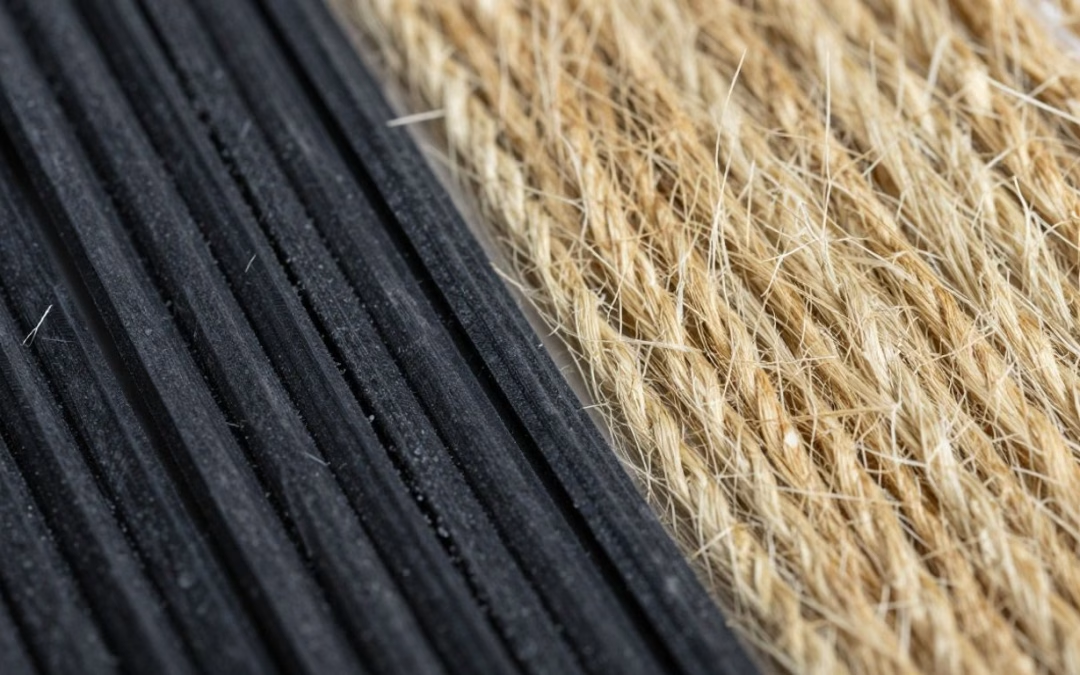
When you’re picking out webbing for furniture, it’s not a one-size-fits-all deal. Jute and rubber webbing are the main players, and they each bring something different to the table. Here’s a quick rundown of what you need to know about rubber webbing vs jute webbing.
Key Takeaways
- Jute webbing is made from natural fibers, giving it great strength for traditional furniture that needs solid support.
- Rubber webbing is stretchy and comfy, making it a good choice for modern furniture where you want a bit of give and bounce.
- Jute can sometimes sag over time, like a hammock, while rubber tends to spring back after you sit on it.
- Rubber webbing can often be used without needing extra springs, which can save on costs and make installation simpler.
- The best choice depends on the furniture’s style, how it will be used, and the comfort level you’re aiming for.
Understanding Upholstery Webbing Types
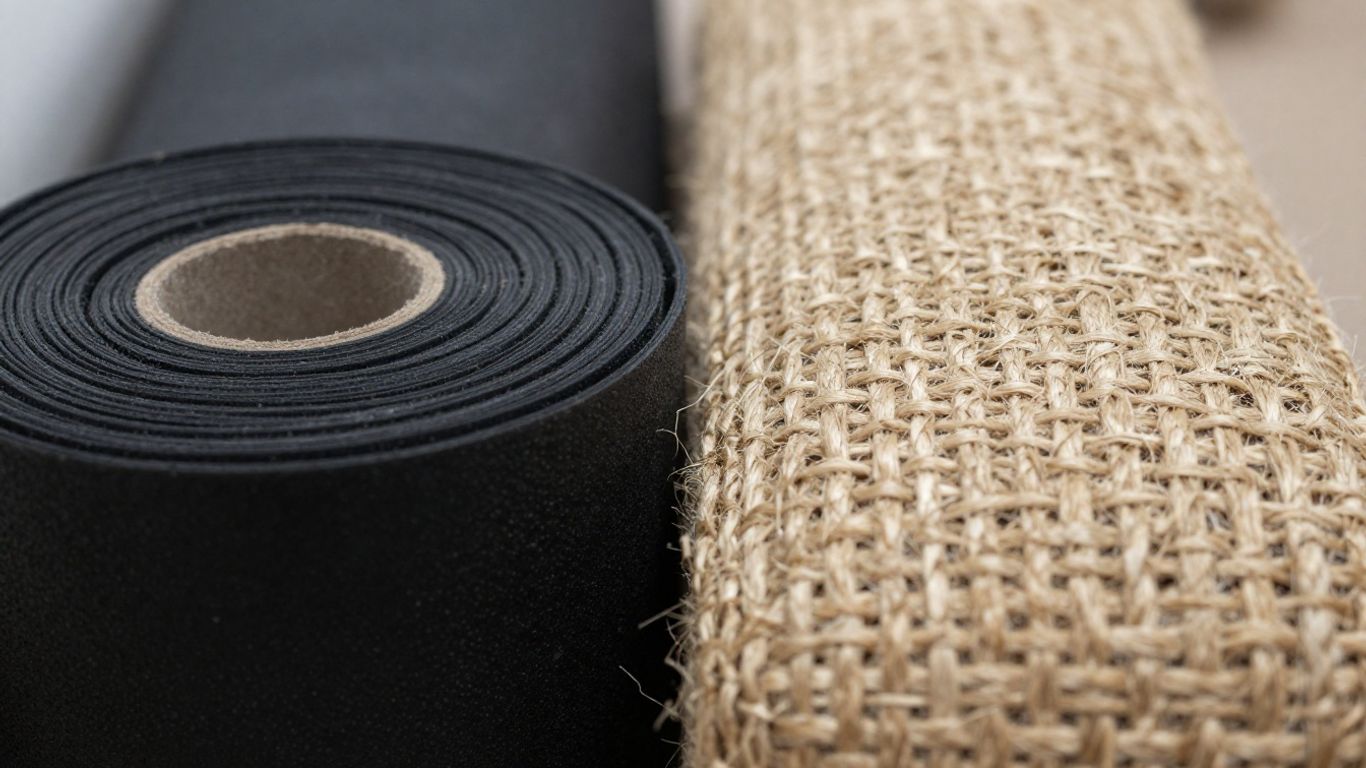
When you’re thinking about fixing up some furniture or building something new, you’ll run into different kinds of webbing. It’s not just one-size-fits-all, you know? The type of webbing you pick really changes how the furniture feels and how long it lasts. Let’s break down the main players.
Jute Webbing: Natural Strength For Traditional Furniture
Jute webbing is like the old-school champ. It’s made from natural fibers, and people have been using it for ages, way before all the synthetic stuff came around in the 1950s. It’s pretty strong and woven tightly, usually stretched across the seats and backs of furniture frames. The thing with jute is, you generally need to use coil springs underneath it for extra support and comfort. It’s a bit more involved than some other types because of that extra step, but it’s got a natural vibe that works great for more traditional pieces. Think of it as the reliable workhorse for classic designs. It’s a solid choice if you’re going for that vintage feel, and it’s pretty easy to work with for most projects. You can find strong options like this 25mm beige C36 webbing that are built for heavy use.
Rubber Webbing: Elasticity For Modern Comfort
Now, rubber webbing is a bit different. It’s super stretchy and strong, and a big plus is that you often don’t need those coil springs anymore. This can actually cut down on production costs if you’re making furniture. It’s great for modern furniture because it offers a nice bit of give and support without feeling stiff. If your furniture frame has little grooves, the webbing can be fitted right in. If not, you can usually secure it with staples or tacks onto a wooden rail. It doesn’t sag easily, which is a huge win for keeping furniture comfortable over time. It’s a popular choice for a reason, offering a good balance of comfort and durability for contemporary styles.
Elastic Webbing: Flexibility And Support
Elastic webbing is all about flexibility. It’s used a lot in things like car seats and cushions because it can really adapt to the shape of whatever it’s supporting. This makes for a much more comfortable experience, especially on long car rides. It provides a good amount of support while still having that give. It’s a bit more specialized, often used where you need that extra bit of cushioning and adaptability. It’s not typically used for the main structural support of a sofa, but more for adding that layer of comfort and preventing things from feeling too hard or flat. It’s a smart way to add a bit of bounce and support where it’s needed most.
Choosing the right webbing is more than just picking a material; it’s about understanding how it will perform and feel in the finished piece of furniture. Each type has its own strengths and weaknesses, and knowing them helps you make a better choice for your project.
Here’s a quick look at how they stack up:
- Jute Webbing: Natural fiber, strong, often needs springs, best for traditional styles.
- Rubber Webbing: Elastic, strong, often no springs needed, great for modern comfort, resists sagging.
- Elastic Webbing: Very flexible, good for cushioning and adaptable support, common in automotive and cushions.
When you’re looking at materials, you might also see options like this 25mm Black Polypropylene Webbing, which is synthetic and offers good resistance to weather and wear, making it suitable for outdoor furniture or gear.
Key Differences In Rubber Webbing vs Jute Webbing
Alright, so you’re trying to figure out what makes rubber webbing and jute webbing tick, right? They both do a job in furniture, but they’re really not the same. It’s like comparing a bouncy castle to a sturdy wooden bench – both are for sitting, but the experience is totally different.
Material Composition And Origin
Jute webbing is all about natural fibers. Think of it as coming straight from the earth, spun into strong bands. It’s been around forever, basically the OG of furniture support before all the fancy synthetics showed up. Because it’s natural, it has a certain look and feel that some folks really dig, especially for older furniture styles. It’s pretty straightforward, made from plant material.
Rubber webbing, on the other hand, is a manufactured product. It’s made from rubber, which gives it that stretchy, springy quality. This means it’s engineered for a specific kind of performance – flexibility and bounce. It’s not really about looking rustic; it’s about how it feels and how it holds up under pressure. It’s a more modern material, designed to offer a different kind of comfort and support.
Durability And Longevity
When we talk about how long these things last, it gets interesting. Jute webbing is strong, no doubt. It’s got good tensile strength, meaning it can handle a good amount of weight. However, over time, especially with constant use, jute can stretch out. This can lead to that dreaded hammock effect where the seat starts to sag. It doesn’t really bounce back to its original shape. While it’s tough, its longevity can be impacted by how it’s used and how much weight it’s carrying. It’s not uncommon for jute to need replacing sooner rather than later if it’s in a high-traffic piece of furniture.
Rubber webbing is built for resilience. Its elastic nature means it can stretch and then snap back. This makes it really good at handling repeated stress without losing its shape. It’s designed to resist sagging and maintain its supportive qualities for a long time. While it can eventually dry out and crack after many, many years, its immediate performance and resistance to that initial sag are often superior to jute. For areas that get a lot of use, like the seats of dining chairs, rubber webbing is often a better bet for long-term comfort.
Comfort And Sagging Properties
Comfort is a big one, and this is where the two really diverge. Jute webbing, when installed correctly with springs, provides a firm base. But without those springs, or if it’s not installed perfectly taut, it can feel a bit stiff. And as mentioned, the sagging issue is real. That gradual dip can make a perfectly good sofa feel old and uncomfortable way before its time. It doesn’t offer much in the way of a springy feel on its own.
Rubber webbing, however, is all about that comfortable, slightly springy feel. It gives a little when you sit down, absorbing some of the impact, and then it springs back. This makes for a really pleasant seating experience, especially in modern furniture where that plush, supportive feel is desired. It avoids the sagging problem that plagues jute, offering a more consistent level of comfort over its lifespan. It’s a different kind of comfort, more about responsive support than just a firm base. You won’t need to worry about things like TG4 Canvas Eyelets for the webbing itself, but the overall feel is much more forgiving.
The choice between jute and rubber webbing often comes down to the desired outcome for the furniture. Jute offers a traditional, firm support that requires careful installation and can be prone to sagging over time. Rubber provides a more modern, resilient comfort that actively resists sagging and offers a springy feel, though it can be more expensive and may eventually degrade.
Performance Characteristics Of Each Webbing
When you’re picking out webbing for a furniture project, how it actually performs is super important. It’s not just about how it looks, but how it feels, how long it lasts, and how it holds up over time. Let’s break down what makes jute and rubber webbing tick.
Tensile Strength And Support
Jute webbing is known for its natural strength. It’s made from plant fibers, so it’s pretty stiff and doesn’t stretch much. This means it provides a solid, firm base for furniture. Think of it like a sturdy belt – it holds things in place without giving much. Because it’s so rigid, you often need to pair it with coil springs to get that comfortable, supportive feel, especially in older furniture styles. This natural fiber strapping functions like a stiff belt, offering minimal stretch. Comfort must be derived from other components of the furniture.
Rubber webbing, on the other hand, has a different kind of strength. It’s got a good amount of tensile strength, but its real superpower is its elasticity. It can stretch and then bounce back. This means it can provide support without feeling rigid. It’s often used in modern furniture where a bit of give is desired, and it can sometimes replace the need for those extra coil springs, which can simplify construction and potentially lower costs.
Elasticity And Resilience
This is where the two really diverge. Jute webbing has very little elasticity. Once it’s stretched, it tends to stay that way, which can lead to sagging over time, kind of like a hammock. It’s not very resilient in that sense; it doesn’t really ‘bounce back’ to its original shape.
Rubber webbing is all about elasticity and resilience. It’s designed to stretch when you sit on it and then return to its original form. This gives furniture a springy feel and helps prevent that dreaded sag. However, like any rubber product, it can dry out and crack over many years, and it does tend to stretch out over time, which can eventually lead to a softer feel or even a "toilet bowl" effect if it stretches too much. This webbing does stretch over time like any rubber.
Resistance To Wear And Tear
Jute webbing is pretty tough against abrasion, but it’s susceptible to moisture and rot because it’s a natural fiber. If it gets wet or is in a damp environment, it can degrade faster. It’s best suited for indoor furniture that stays dry.
Rubber webbing is generally more resistant to moisture than jute. However, its main weakness is its susceptibility to UV rays and extreme temperatures over long periods, which can cause it to become brittle and crack. While it’s durable for its intended use, it’s not immune to the effects of time and environment. For outdoor applications, you might look into elastic webbing made of polyester, which offers better resistance to UV and moisture.
When choosing between jute and rubber webbing, think about the kind of support and feel you want. Jute gives you a firm, traditional base, while rubber offers a more flexible, modern comfort. Both have their place, but their performance characteristics are quite different.
Here’s a quick comparison:
- Jute Webbing:
- Low elasticity, high stiffness.
- Provides firm support.
- Susceptible to moisture and rot.
- Can sag over time.
- Rubber Webbing:
- High elasticity, good resilience.
- Offers a springy, comfortable feel.
- Can stretch out over time.
- Can dry out and crack with age.
Applications In Furniture Design
Traditional Upholstery Needs
When you’re working on a piece of furniture that has a more classic feel, like an antique armchair or a vintage sofa, jute webbing is often the go-to choice. It’s got that natural, sturdy vibe that just fits with older styles. Think of it as the backbone for furniture that’s meant to last and look the part. It’s great for giving seats that firm, supportive base that doesn’t give way easily. You’ll find it used a lot in sofas and chairs where you need that reliable strength.
- Provides a solid foundation for seat cushions.
- Maintains the original look and feel of traditional pieces.
- Offers excellent support for heavier furniture components.
Modern Furniture Requirements
Now, if you’re designing something more contemporary, something that screams comfort and a bit of bounce, rubber webbing is where it’s at. This stuff is all about elasticity. It stretches and springs back, which means it can handle a lot of use without getting saggy. It’s perfect for those modern sofas and chairs where you want that plush, comfortable feel. Plus, it often means you don’t even need to worry about adding springs underneath, which can simplify the build. It’s a really popular choice for modern furniture designs because it just feels so good to sit on and holds up well.
Specific Furniture Components
Both jute and rubber webbing have their favorite spots in furniture construction. Jute is fantastic for the main support structure, especially for seats that need to stay firm. It’s like the reliable workhorse. Rubber webbing, on the other hand, shines when you need that bit of give and comfort. It’s often used in areas that get a lot of pressure, like the main seating surfaces of sofas or even in the backrests for added cushioning. For things like car seats, elastic webbing is a big deal because it conforms to your body and makes the ride much more comfortable.
Webbing is a key component that directly impacts how a piece of furniture feels and how long it lasts. Choosing the right type means the difference between a piece that sags after a year and one that remains comfortable and supportive for ages. It’s not just about looks; it’s about the actual experience of using the furniture.
Here’s a quick look at where each type often ends up:
- Jute Webbing: Primarily used for the base support of seating in sofas and chairs, especially in traditional styles. It’s also good for reinforcing edges or areas needing rigid support.
- Rubber Webbing: Ideal for the main seating surfaces of modern chairs and sofas, providing comfort and preventing sag. It can also be used in armrests or back supports for a softer feel.
- Elastic Webbing: Frequently found in automotive upholstery for comfort, and sometimes in cushions or specific areas of residential furniture where flexibility and a conforming feel are desired. You can find various types of twill tape that might be suitable for reinforcing edges or straps on furniture.
Installation And Maintenance Considerations
Ease of Installation
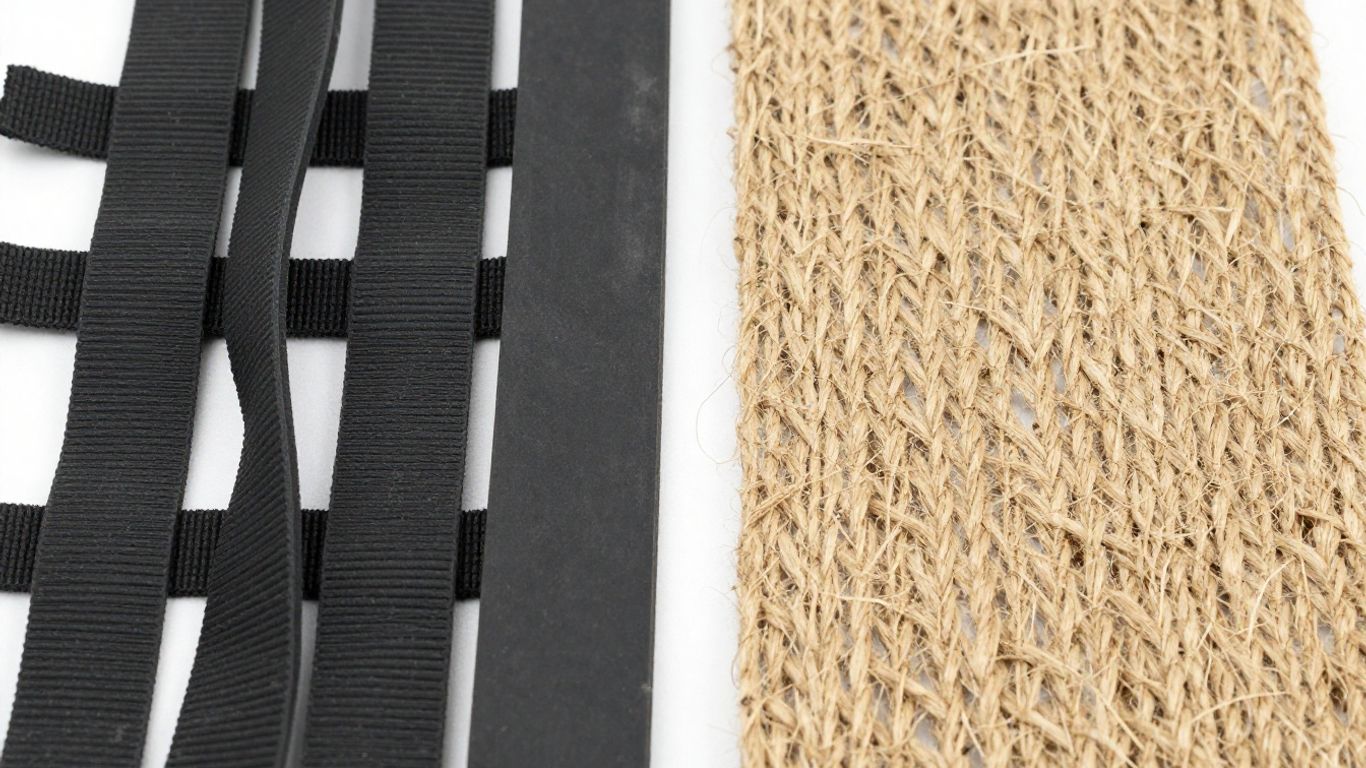
When it comes to getting your webbing onto the furniture frame, there are definitely some differences between jute and rubber. Jute webbing, being a natural fiber, usually requires a bit more effort. You’ll often need a special tool called a webbing stretcher to get it nice and taut. This tool helps you pull the jute tight before you staple it down, making sure it provides solid support without sagging. It’s a bit of a process, and getting the tension just right is key. You can find some helpful tips on installing jute webbing for seat and back support here.
Rubber webbing, on the other hand, is generally a lot simpler to install. Since it’s stretchy, you can often just pull it by hand and staple it into place. It doesn’t need that extreme tension like jute does. You can weave it across the frame, and its natural elasticity does a lot of the work for you. This makes it a quicker option, especially if you’re working on a project where time is a factor.
Long-Term Care And Potential Issues
Both types of webbing need a little attention over time, but the issues can differ. Jute webbing, while strong, can eventually loosen up, especially in areas that get a lot of use. If it starts to sag, you might need to re-tension it or even replace sections. It’s also susceptible to moisture, which can weaken the fibers over time. So, keeping it dry is pretty important.
Rubber webbing is pretty low-maintenance. Its main advantage is that it doesn’t sag easily, which means fewer trips to the repair shop. However, over many years, the rubber can degrade, especially if exposed to direct sunlight or extreme temperatures. This can lead to it becoming brittle or losing its elasticity. So, while it’s great for modern furniture, you might want to avoid placing it in direct sun if possible.
Cost Implications Of Each Type
Generally speaking, jute webbing tends to be the more budget-friendly option upfront. It’s a natural material, and its production is usually less complex than synthetic or rubberized materials. This makes it a go-to for many traditional upholstery projects where cost is a significant consideration.
Rubber webbing, or elastic webbing as it’s often called, can be a bit more expensive initially. The manufacturing process for creating that consistent stretch and durability costs more. However, many people find that the longevity and reduced need for repairs with rubber webbing can make it a more cost-effective choice in the long run. It’s like buying a slightly more expensive tool that lasts twice as long – you save money over time. When you’re looking at different options, it’s worth considering the total lifespan and how often you might need to replace it. For some applications, like outdoor shade sails, durable hardware like a double swivel pulley 19mm is also a consideration for longevity.
Choosing the right webbing isn’t just about the initial price tag. You’ve got to think about how easy it is to work with, how long it’s likely to last, and what kind of comfort it’s going to provide. Sometimes spending a little more upfront saves you a lot of headaches later on.
Choosing The Right Webbing For Your Project
So, you’ve been looking at all the different kinds of webbing, and now it’s time to actually pick one for your furniture project. It can feel a bit overwhelming, right? Don’t sweat it. The main thing is to think about what you’re actually trying to achieve with your piece.
Assessing Furniture Needs
First off, what kind of furniture are we talking about? Is it a comfy armchair that needs to feel plush and supportive for hours, or is it a dining chair where a firmer seat is more the goal? For that sink-in feeling, you might lean towards something with more give, like elastic webbing. If you need something super sturdy that won’t budge, jute might be your go-to. Think about the weight it needs to hold and how often it’ll be used. A sofa that gets daily use needs different support than a decorative stool.
Here’s a quick rundown to help you decide:
- Modern Sofas & Chairs: Often benefit from the elasticity and comfort of rubber or elastic webbing. They tend to offer a more forgiving feel and can reduce the need for traditional springs.
- Traditional Furniture: Jute webbing is a classic choice here. It’s known for its natural strength and works well with the sprung systems common in older pieces.
- High-Traffic Seating: Needs webbing that can handle a lot of weight and repeated use. Consider heavier grades of jute or even polyolefin if you’re worried about moisture.
- Decorative Pieces: Might not need the same level of robust support, so lighter-weight options could suffice.
Balancing Aesthetics and Functionality
It’s not just about how it feels, but also how it looks and how it holds up over time. Jute webbing, with its natural, earthy look, can add a certain charm to traditional pieces. Rubber webbing, on the other hand, is usually hidden away, so its aesthetic is less of a concern than its performance. You want something that feels good, looks good (or is invisible!), and lasts. The best webbing will support your furniture’s structure without showing signs of wear too quickly.
Making An Informed Decision
When you’re picking out webbing, think about these points:
- Durability: How long do you expect this piece of furniture to last? Rubber and synthetic options often have a longer lifespan than natural fibers, especially in damp conditions.
- Comfort: Do you want a soft, yielding seat or a firm, supportive one? Elasticity plays a big role here.
- Installation: Some types, like woven elastic, are pretty straightforward to install, while others might require more specialized tools or techniques.
- Cost: While not always the deciding factor, price can influence your choice. Jute is often more budget-friendly, but remember to factor in any additional components like springs.
Ultimately, the "better" webbing isn’t a one-size-fits-all answer. It really depends on the specific demands of your project. A little bit of thought upfront about what you need the webbing to do will save you a lot of headaches down the road.
Conclusion
So, rubber webbing vs jute webbing – which one wins? It really depends on what you’re trying to achieve. Jute offers that classic, strong support perfect for traditional pieces that need to last generations. Rubber, on the other hand, brings modern comfort and bounce, ideal for those comfy contemporary sofas and chairs where sag is the enemy. Think about the style of your furniture, how it will be used, and what kind of feel you want. Both have their place, but knowing their differences helps you pick the right one to make your furniture project a success.
Frequently Asked Questions
What’s the main difference between rubber and jute webbing?
Think of jute webbing as the sturdy, natural option, great for giving furniture a firm base, like in older, classic pieces. Rubber webbing is more like a stretchy band; it’s flexible and gives a softer, bouncier feel, which is awesome for modern furniture that needs to be comfy and resist sagging.
Can rubber webbing replace jute webbing in my furniture?
Yes, often you can! Rubber webbing is sometimes used instead of jute because it doesn’t sag as much over time. It gives a nice springy feel without needing coil springs, which can simplify things.
Does jute webbing last as long as rubber webbing?
Jute is strong and durable, especially for support. Rubber webbing is also quite durable, but like all rubber, it can dry out and crack after many, many years. Jute might be more prone to stretching and sagging over a long time if not installed perfectly.
Is rubber webbing more comfortable than jute webbing?
Generally, yes, rubber webbing is considered more comfortable for modern seating. Its elasticity provides a softer, more cushioned feel that springs back. Jute provides a firmer support, which is great for structure but might not feel as plush on its own.
Which type of webbing is better for a sofa?
For a sofa, it really depends on the look and feel you want. If you’re going for a traditional, firm seat, jute is a solid choice. If you want a modern, sink-in comfy feel that bounces back, rubber webbing is probably a better fit. Sometimes, a mix is even used!
Is rubber webbing more expensive than jute webbing?
Yes, rubber webbing usually costs more than jute webbing. Jute is made from natural plant fibers, which are generally less expensive to process. Rubber requires more complex manufacturing, driving up the price a bit.