
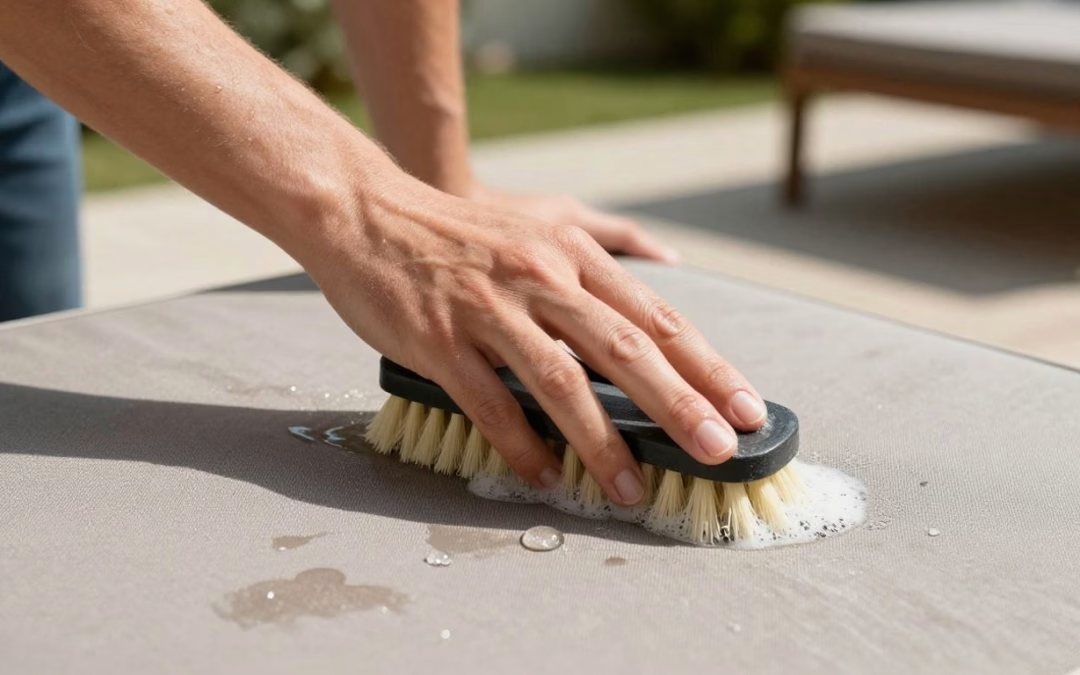
Here are the main points to remember when cleaning your outdoor cushions to make sure they stay looking good and last longer.
Key Takeaways
- Always check the fabric type of your cushions before you start cleaning.
- For tough grime, pressure washing on a low setting can be effective, but be careful.
- Household items like mild soap or an oxygenated cleaner work well for spot cleaning.
- Rinse thoroughly to remove all cleaning product and let cushions air dry completely.
- Regular dusting and protecting cushions from harsh weather will help maintain them.
Preparing Your Patio Cushions For Cleaning
Before you even think about scrubbing or spraying, a little prep work goes a long way. Getting your patio cushions ready for a good clean means making sure the area is clear and you have the right stuff on hand. It’s not exactly rocket science, but doing it right makes the actual cleaning part way easier.
Clear The Surrounding Area
First things first, you need some space to work. Move any small tables, planters, or other items away from the cushions. You don’t want to be tripping over things or getting cleaning solution on stuff that doesn’t need it. Also, if you’re planning on using any sprays, it’s a good idea to close nearby windows and doors. You don’t want that stuff drifting inside. Think about protecting any delicate plants or outdoor electronics too, just in case.
Assess Cushion Material
Not all cushions are created equal, and knowing what yours are made of is pretty important. Most outdoor cushions are made from synthetic fabrics like polyester or acrylic, which are pretty tough. But some might have special coatings or fillings. Check the tags if you can find them. If you’re unsure, it’s always safer to start with the gentlest cleaning method. You can find some great outdoor cushions that are designed for easy care, but even those benefit from knowing their material.
Gather Necessary Cleaning Supplies
Having everything ready before you start means less stopping and starting. You’ll likely need:
- A soft brush (an old toothbrush works for spots, a larger scrub brush for bigger areas)
- Clean cloths or rags (microfiber ones are good)
- A bucket for mixing cleaning solutions
- Mild soap or a specialized outdoor fabric cleaner
- A hose or pressure washer (if you’re going for a deep clean)
- A dry towel for blotting
It’s always a good idea to test any cleaning solution on an inconspicuous spot first. You don’t want to find out it discolors your cushions after you’ve cleaned the whole thing. A little patch test saves a lot of potential headaches later on.
Having the right tools makes the job less of a chore. For instance, a good scrub brush can really help lift dirt that’s caked on. If you’re dealing with a lot of cushions, having a system down before you start will make the whole process much smoother. Remember, dampening a rag with clean water is often the very first step, even before applying any cleaners.
Effective Methods For Cleaning Outdoor Cushions
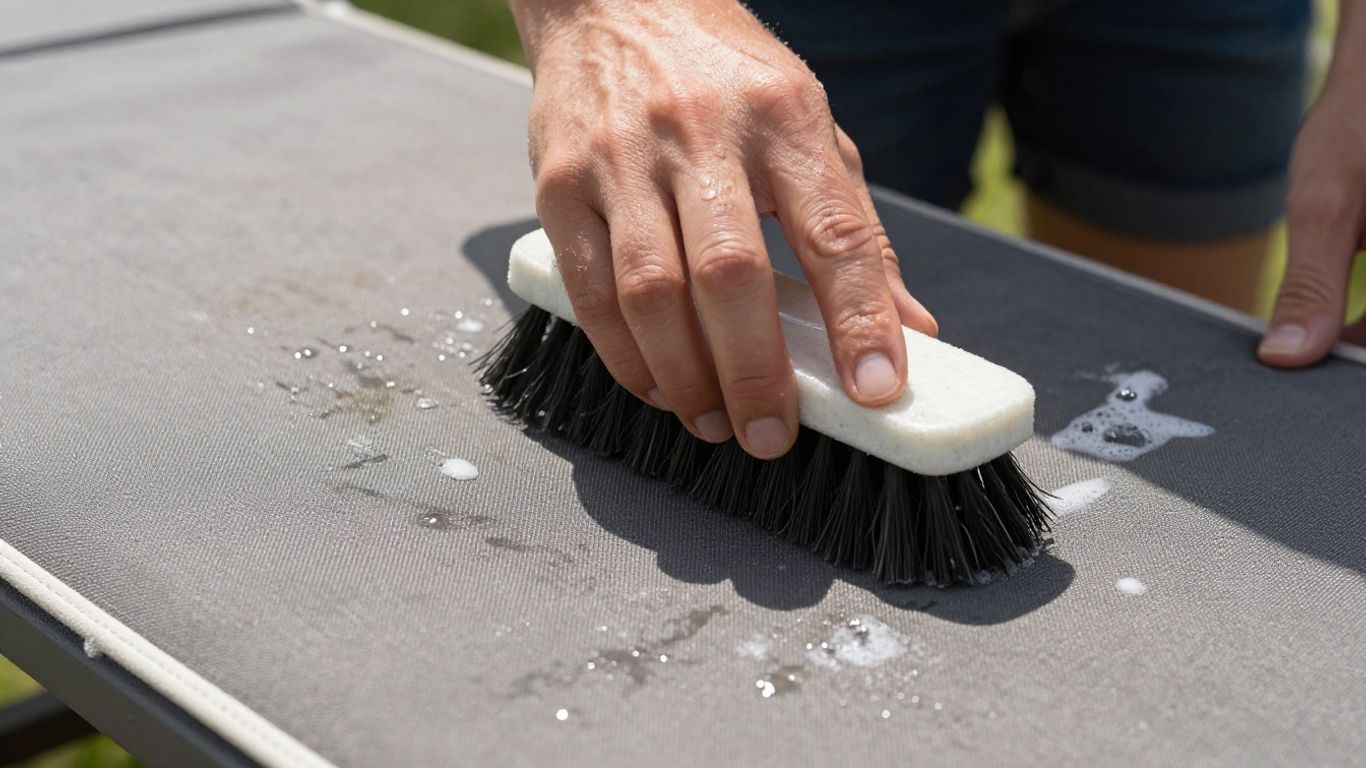
So, your patio cushions have seen better days, huh? Don’t worry, it happens to the best of us. Whether it’s a rogue bird, some tree sap, or just general grime, outdoor cushions tend to collect a bit of everything. Luckily, there are some solid ways to get them looking good again without too much fuss.
Pressure Washing For Deep Cleaning
If your cushions are really grimy and can handle a bit more power, pressure washing can be a game-changer. It’s way faster than scrubbing by hand, especially for those big, bulky cushions. Just make sure you’re using the lowest pressure setting possible on your washer. You don’t want to end up with shredded fabric! Start with a gentle cleaner, maybe something with peroxide, and keep the nozzle a good distance away. Work in slow, steady motions, and always rinse thoroughly afterward. It’s a good idea to check out some pressure washer tips before you start, just to be safe.
Spot Cleaning With Household Solutions
For everyday dirt or smaller messes, you don’t always need the big guns. Sometimes, a simple approach works best. Start by giving the cushion a good vacuuming with an upholstery attachment. This gets rid of loose debris and dried-on bits before you even get a cloth wet. Then, grab a clean rag – a microfiber one works great – and a bowl of warm water. For tougher spots, a little bit of mild soap or even a diluted solution of OxiClean can work wonders. Just dab, don’t rub too hard, and try not to soak the cushion.
- Vacuum First: Always start by removing loose dirt and debris.
- Damp Cloth: Use a slightly damp cloth for general wiping.
- Mild Soap Solution: For tougher spots, a mix of water and a gentle soap is your friend.
- Blot, Don’t Rub: Aggressive rubbing can spread stains or damage fabric.
Sometimes, the simplest solutions are the most effective. Don’t underestimate the power of a good vacuum and a damp cloth for everyday upkeep.
Gentle Hand Washing Techniques
When you want to be extra careful or your cushions can’t handle pressure washing, hand washing is the way to go. Mix up a solution of mild soap and water in a bucket. Use a soft brush or a sponge to gently work the soapy water into the fabric. Focus on any stained areas, but be gentle. After you’ve scrubbed, rinse thoroughly with clean water. You can use a garden hose on a gentle setting for this. Make sure all the soap is gone, or you might end up with residue that attracts more dirt later. It’s a bit more work, but it’s a reliable method for keeping your cushions in good shape, much like how couch reupholstery can give furniture a new lease on life.
- Use a soft-bristle brush or sponge.
- Work in circular motions on stained areas.
- Rinse thoroughly until no suds remain.
- Avoid harsh scrubbing that could damage the fabric.
Tackling Stubborn Stains On Patio Cushions
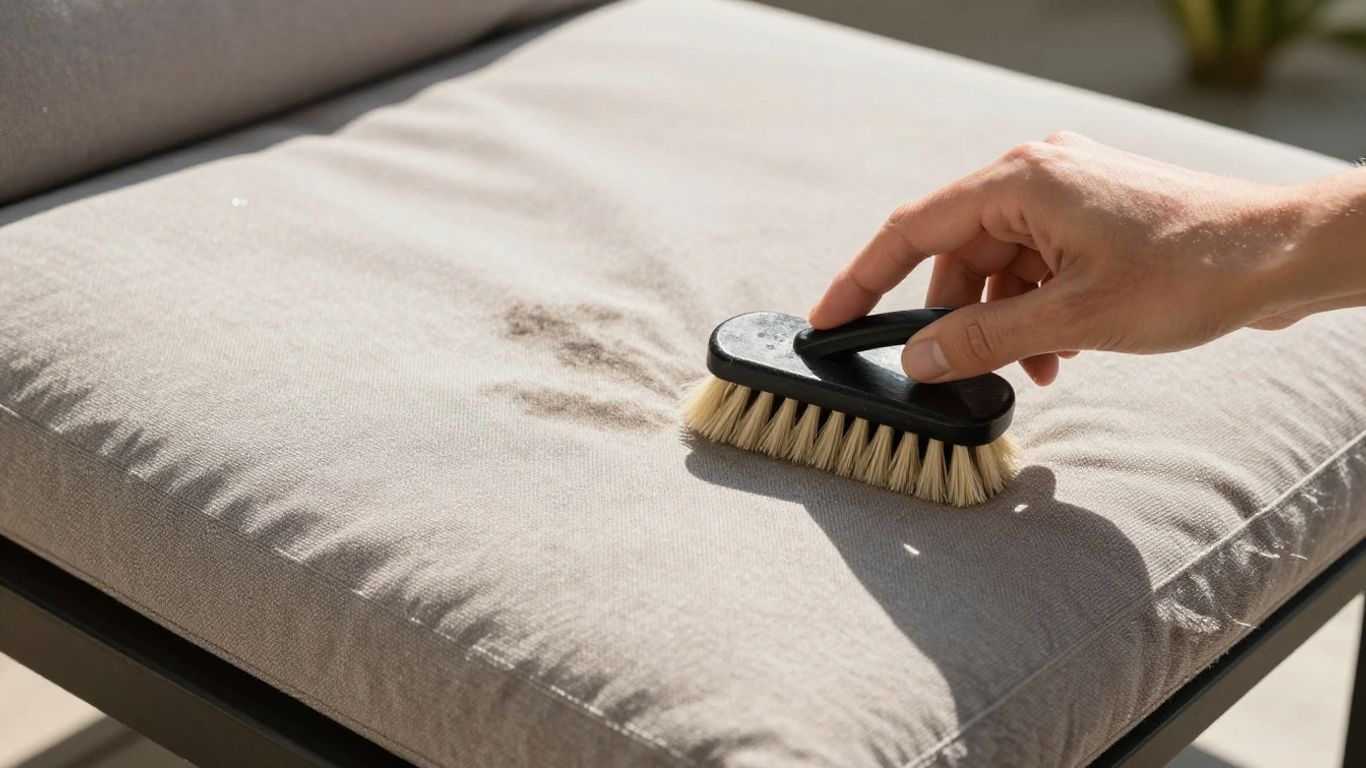
Sometimes, a simple wash just won’t cut it. Those stubborn spots from bird droppings, tree sap, or just general grime can really make your outdoor cushions look sad. Don’t worry, though, there are ways to fight back.
Using Peroxide-Based Cleaners
Peroxide-based cleaners are pretty good at breaking down organic stains. You can find them in specialized outdoor cleaners, often designed for pressure washers. These products usually work by lifting the stain without being too harsh on the fabric itself. Just follow the instructions on the bottle carefully. Always test a small, hidden area first to make sure it doesn’t affect the color.
Employing Oxygenated Stain Removers
Oxygenated cleaners, like those with OxiClean, are another solid option. You can mix a powder with warm water to create a paste or a cleaning solution. For tougher spots, use an old toothbrush or a scrub brush to work the solution into the fabric. Let it sit for a bit to do its magic, then rinse thoroughly. This method is great for those dried-on bits that just won’t budge.
Addressing Bird Droppings and Tree Sap
Bird droppings and tree sap can be particularly tricky. For fresh droppings, try to gently scrape off as much as possible before it dries. For sap, sometimes a bit of rubbing alcohol on a cloth can help dissolve it, but again, test first. If you’re using a pressure washer, keep the nozzle a good distance away to avoid damaging the fabric. For general cleaning of these types of messes, a mild soap and water solution is a good starting point, but you might need to step up to an oxygenated cleaner for the really tough stuff. Remember to rinse well after any treatment. You can find some good cleaning supplies at janitorial supply stores.
Dealing with tough stains often requires a bit of patience and the right tools. Don’t be afraid to try a few different methods, but always proceed with caution to protect your cushion fabric.
The Importance Of Proper Rinsing And Drying
So, you’ve gone through the whole cleaning process, maybe scrubbed away some tough stains, and now your patio cushions are looking pretty good. But hold on, we’re not quite done yet. The rinsing and drying stages are actually super important, and skipping them or doing them wrong can cause more problems than you might think.
Rinsing Away Cleaning Residue
Think about it: if you don’t get all that soap or cleaning solution out, it can actually attract more dirt later on. Plus, leftover residue can sometimes break down the fabric over time, which is definitely not what we want. You want to make sure you’re rinsing thoroughly until the water runs clear. It might take a few passes, especially if you used a stronger cleaner.
- Start with a gentle rinse: Use your hose on a low setting or a bucket of clean water.
- Work from top to bottom: This helps the dirty water flow away from the clean parts.
- Check for suds: Keep rinsing until you don’t see any more bubbles or feel any slipperiness.
Removing Excess Moisture
Once they’re rinsed, those cushions are going to be pretty soaked. You don’t want them sitting in a puddle of water. Gently pressing on the cushions can help squeeze out a good amount of the water. If the covers are removable and washable, you might even be able to give them a gentle wring, but be careful not to stretch or damage the fabric. For really stubborn moisture, you could even use a dry towel to blot them down. It’s all about getting as much water out as possible before they start their long air-dry.
Ensuring Complete Air Drying
This is probably the most critical step. Damp cushions are a breeding ground for mold and mildew, and nobody wants that musty smell taking over their patio. You need to let them air dry completely. Find a spot where they can get good airflow, maybe propped up on their sides or even hung if possible. Avoid putting them back on furniture or stuffing them into storage while they’re still even a little bit damp. It might take a day or two, depending on the weather, so be patient. If you’re in a hurry, you could try using a fan to speed things up, but natural air drying is usually best. It’s worth the wait to avoid future headaches. If you’re looking for ways to keep your furniture looking good, checking out how to replace patio chair webbing might be a good idea for when things get worn out.
Maintaining Clean Outdoor Cushions
Keeping your patio cushions looking good after you’ve put in the effort to clean them is key. It’s not a one-and-done kind of deal, you know? A little bit of regular upkeep goes a long way in preventing those deep, stubborn stains from setting in.
Regular Vacuuming To Remove Debris
Think of your cushions like a rug for your outdoor space. Before anything wet hits them, give them a good once-over with a vacuum cleaner. A handheld vacuum with a brush attachment works wonders for sucking up loose dirt, dust, pet hair, and any dried-on bits of leaves or pollen. This step is super important because it removes the dry debris before it can get ground into the fabric or turn into a muddy mess when it gets wet. It really helps to get into those nooks and crannies where dust bunnies like to hang out. You can find some great cordless stick vacuums that make this chore a breeze.
Protecting Cushions From The Elements
Sun, rain, and even just general dust can take a toll on your cushions over time. The best defense is a good offense, and that means protecting them when you’re not actively using them. If you have furniture covers, use them! They’re designed to keep the worst of the weather off. Even just tossing a tarp over them can make a difference during unexpected downpours. If your cushions are particularly prone to mildew or fading, consider treating them with a fabric protector spray designed for outdoor use. This creates a barrier that helps repel water and stains.
Storing Cushions During Off-Season
When the weather really starts to turn, and you’re not using your patio furniture anymore, it’s time for proper storage. Don’t just leave them out there to face the elements all winter. Find a dry, protected spot like a garage, shed, or even a large storage bin. Make sure they are completely dry before you pack them away to avoid any mold or mildew issues. If you don’t have a lot of space, consider cushions that can be easily folded or rolled for storage. This simple step will make cleaning them a lot easier when spring rolls around again.
Conclusion
Keeping your outdoor cushions clean doesn’t have to be a huge chore. By following these simple steps, you can tackle dirt, stains, and mildew, making your patio a more inviting place to relax. Remember to check your cushion material first, use the right cleaning methods, and always let them dry completely. A little regular care can go a long way in extending the life of your outdoor furniture and keeping it looking its best season after season.
Frequently Asked Questions
What’s the first thing I should do before cleaning my patio cushions?
Before you do anything else, you should clear the area around your cushions. Make sure there aren’t any electrical cords or things you don’t want to get wet nearby. It’s also a good idea to check what kind of material your cushions are made of, as this can change how you should clean them.
Can I just hose down my outdoor cushions?
You can use a garden hose, but it might not be strong enough to get out really set-in dirt or stains. If you have a pressure washer, you can use it on a very low setting. Just be sure to keep the nozzle a good distance away from the fabric so you don’t damage it.
What household items can I use to clean stains?
Lots of things you probably already have can work! A mix of warm water and a little bit of mild soap or even a bit of an oxygen-based cleaner, like OxiClean, can help lift stains. Just test it on a small, hidden spot first.
How do I get rid of bird droppings or tree sap?
For sticky stuff like tree sap or tough spots like bird droppings, you might need a bit more power. Try using a soft brush dipped in a cleaning solution. Gently scrub the spot, then wipe it away. Peroxide-based cleaners can also be good for tough stains.
Why is rinsing so important?
Rinsing is super important because you want to get all the soap or cleaning stuff out of the fabric. If you leave soap behind, it can attract more dirt later on or even damage the material over time. So, give them a good rinse with plain water.
How should I dry my cushions after cleaning?
The best way to dry them is to let them air dry completely. You can press out some of the extra water first. Hang them up if possible, or lay them flat in a spot where they can get good air circulation. Don’t put them back on the furniture until they are totally dry to prevent mold or mildew.