
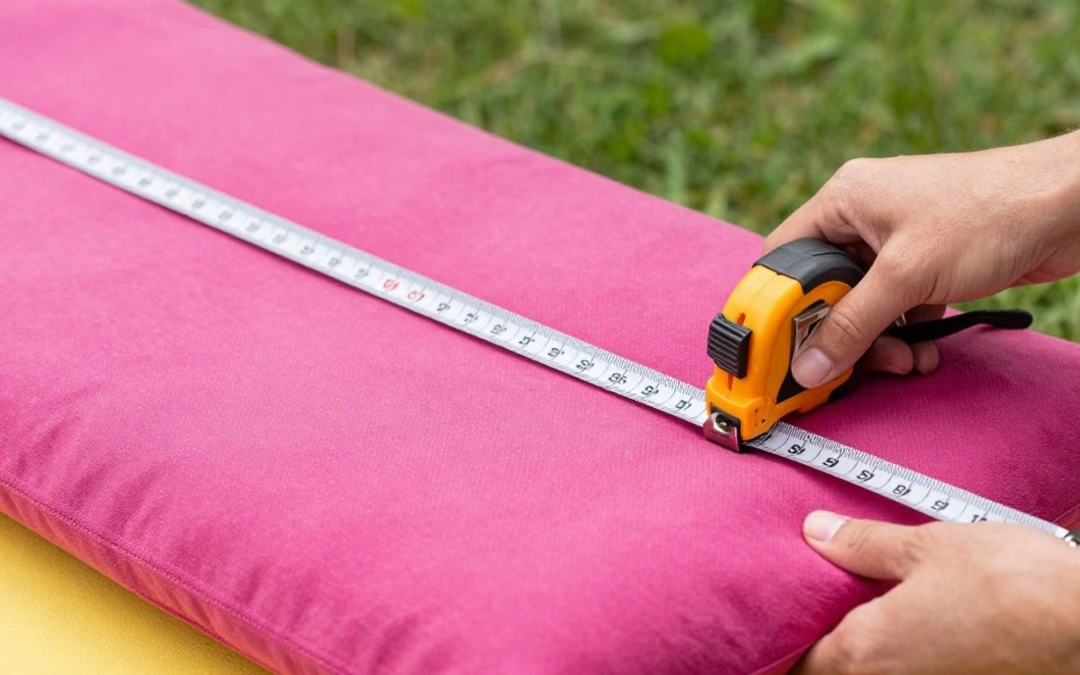
Getting new cushions for your patio furniture is a great way to update your space. To make sure they fit just right, follow these simple steps and tips:
Key Takeaways
- Always measure the furniture frame directly, not your old cushions, because old cushions can lose their shape.
- Use a sturdy measuring tape and a notepad to record your measurements accurately.
- Measure the width from side to side and the depth from front to back, staying level.
- Pay attention to the specific shape of your furniture, like tapered seats or T-cushions, and measure accordingly.
- Double-check all your measurements before ordering to avoid any fit issues.
Essential Tools For Accurate Patio Cushion Measurements
Getting new cushions for your patio furniture is exciting, but the real trick is making sure they fit just right. You don’t want to end up with cushions that are too big, too small, or just awkward. The good news is, you don’t need a whole workshop to get accurate measurements. Having the right tools and knowing how to use them is half the battle.
Gather Your Measuring Supplies
Before you start measuring, take a moment to collect what you’ll need. It makes the whole process smoother and less frustrating. You’ll want to have these items handy:
- A reliable measuring tape: This is your most important tool. More on this in a sec.
- A notepad and pen (or a notes app on your phone): You’ll be jotting down numbers, and you don’t want to forget them or mix them up.
- Optional: Painter’s tape: This can be helpful for marking the edges of your furniture frame if it’s not super obvious.
- Optional: A camera: Sometimes a quick photo of the furniture frame can help you remember tricky shapes or details later.
Remember, the goal is to measure the furniture frame itself, not your old, possibly saggy cushions. Over time, cushions can compress and lose their shape, leading to inaccurate measurements if you rely on them solely. Measuring the frame gives you the true dimensions of the space your new cushions need to fill.
Choosing The Right Measuring Tape
When it comes to measuring tapes, not all are created equal for this job. While a flexible tailor’s tape might seem handy, it can bend and stretch, giving you a slightly off reading. For patio furniture, a rigid tape measure is usually best. Think of the kind a carpenter might use. It stays straight and true, giving you a more precise measurement, especially for width and depth. If you only have a flexible tape, just be extra careful to keep it pulled taut and straight across the surface you’re measuring.
Utilizing A Notepad And Pen
Don’t underestimate the power of good old-fashioned note-taking. As you measure each part of your furniture – the width, depth, and height – write it down immediately. Be specific. Instead of just writing "width," write "Seat Width – Front" or "Back Width." If your seat is tapered, you’ll need both measurements. It’s also a good idea to note the shape of the cushion, like "T-cushion" or "Rounded corners." This detailed record will be super helpful when you’re ordering custom cushion replacements or comparing options.
Here’s a quick rundown of what to record for each cushion:
| Cushion Type | Width (Left to Right) | Depth (Front to Back) | Height/Thickness | Shape Notes |
|---|---|---|---|---|
| Seat | ||||
| Back | ||||
| Armrest (if applicable) |
Having this organized information prevents confusion and ensures you get cushions that fit perfectly.
The Golden Rule: Measure The Furniture Frame
Okay, so you’re ready to get new cushions, and you’re thinking, ‘Easy, I’ll just measure my old ones.’ Hold up a second. That’s actually the biggest mistake people make. Over time, cushions get squished, they sag, and they just don’t hold their original shape anymore. Trying to measure a worn-out cushion is like trying to measure a deflated balloon – it’s just not going to give you an accurate picture of the space you need to fill.
Why Measuring The Frame Is Crucial
The real fit comes from measuring the actual furniture frame itself. Think of it like buying a picture frame; you measure the opening where the picture goes, not the old, faded photo. Your furniture frame has a specific opening, and that’s what your new cushions need to fit snugly into. This ensures they sit right, look neat, and don’t slide around or bunch up. It accounts for the true dimensions of your seating area, which is super important for comfort and appearance.
Understanding Cushion Compression
Outdoor cushions, especially those that have seen a lot of sun and use, tend to compress. The foam inside can break down, and the fabric can stretch or shrink. This means your old cushion might be smaller than the space it actually occupies. If you order based on the old cushion’s size, you’ll likely end up with cushions that are too small, leaving gaps and looking sloppy. It’s always better to measure the inside dimensions of the furniture frame where the cushion is supposed to sit. This is especially true for seat cushions where compression is most noticeable.
Avoiding Common Measurement Pitfalls
Here are a few things to watch out for when you’re measuring:
- Don’t measure the old cushion: Seriously, resist the temptation. It’s almost always going to be inaccurate.
- Measure inside the frame: Always measure from the inside edge of the frame to the inside edge. Don’t measure the outside of the frame or the old cushion’s outer seams.
- Account for taper: Many outdoor furniture pieces, especially dining chairs, have seats that are wider at the front than at the back. Make sure to measure both the front width and the back width if there’s a noticeable difference. This is key for a good fit on tapered seats.
- Level measurements: When measuring depth, keep your tape measure level. Don’t follow any curves in the seat deck; measure straight across from the back support to the front edge.
When in doubt, it’s always best to measure the frame. This might take a few extra minutes, but it’s the only way to guarantee your new cushions will fit perfectly and look great for years to come. It’s the difference between a cushion that ‘sort of’ fits and one that looks like it was made for your furniture.
If you’re dealing with something like chair webbing, getting the right width is also a big deal for support, and that starts with accurate frame measurements. For most standard chairs, a 2-inch wide webbing works well, but wider options are available for heavier pieces like armchairs or benches, so knowing your frame’s dimensions is always the first step to getting the right materials like webbing.
How To Measure Seat Cushions For A Perfect Fit
Alright, let’s talk about getting those seat cushions just right. It’s not rocket science, but you do need to be a little bit careful. A cushion that fits like a glove makes all the difference in how your patio furniture looks and feels. We’re going to focus on measuring the actual furniture frame, not just your old, possibly squashed, cushions. This is the key to a truly perfect fit.
Clearing the Seat Deck for Measurement
First things first, you gotta clear the stage. Take off the old cushion. Seriously, just lift it off. What you’re looking at now is the seat deck – the part of the furniture where the cushion actually sits. This is your blueprint. Don’t measure the old cushion; it’s probably lost its shape over time. Think of it like trying to fit a new rug in a room – you measure the floor, not the old, worn-out rug that’s been there for ages.
Determining Seat Width Accurately
Now, grab your tape measure. You want to measure the width from the inside edge of the frame on one side to the inside edge on the other. Do this at the widest part, which is usually the front. If your seat narrows towards the back, you’ll need to take a second measurement there too. Write both down. This is super important for seats that aren’t perfectly square. You don’t want a cushion that’s too tight at the back or too loose at the front, right?
Here’s a quick rundown:
- Measure the front width: From inside frame to inside frame.
- Measure the back width (if different): From inside frame to inside frame.
- Note any tapering: Is the seat wider at the front than the back?
Remember, a little bit of wiggle room is actually a good thing. Cushions that are too snug can wrinkle and wear out faster along the seams. We’re aiming for a clean fit, not a wrestling match.
Measuring Seat Depth From Back to Front
Next up is depth. This is the measurement from where the seat cushion meets the back of the furniture, all the way to the very front edge of the seat deck. Try to keep your tape measure level and straight. Don’t follow any curves in the furniture; just a straight line from back to front. Again, jot this down to the nearest quarter-inch. This measurement tells you how far forward the cushion needs to extend to give you proper support. If you’re looking for replacement cushions, getting this right is half the battle.
Identifying Unique Seat Shapes
Not all seats are simple rectangles, are they? You might have seats that are:
- T-shaped: These extend forward around the arms of a sofa or chair.
- Trapezoidal or Tapered: Narrower at one end than the other.
- Rounded Corners: Common on more upscale lounge furniture.
- Curved Fronts: You see this a lot with wicker or rattan styles.
Knowing the shape helps when you’re ordering. If your seat has a unique shape, it’s a good idea to sketch it out or take a picture to help visualize how the cushion will fit. This is where you might need to get a bit creative with your measurements, perhaps taking multiple points along a curve to get an average or the longest span.
Measuring Back Cushions For Outdoor Furniture
Back cushions are what give your outdoor seating that cozy, finished look. Getting them right means your furniture feels as good as it looks. It’s not just about height and width; it’s about how they integrate with the rest of the frame.
Calculating Back Cushion Width
When you measure the width for your back cushions, you’re looking for the space inside the frame where the cushion will actually sit. Think of it like measuring the shoulders of a shirt. You want it to fit snugly but not be so tight it bunches up.
- Measure the inside width at the top of the back frame. This is usually where the cushion will rest.
- If your furniture has arms that curve inward or a frame that narrows at the top, you might need to take a second measurement lower down where the cushion will sit. Always record the narrowest width to avoid a cushion that’s too big.
- For wider pieces like sofas, measure the width in at least two or three spots and use the smallest measurement.
Determining Back Cushion Height
For the height, you’re generally measuring from where the seat cushion ends (or the seat deck) up to the top of the furniture’s back frame. This gives you the main body height of the cushion.
- Start at the seat deck, which is the surface your seat cushion sits on.
- Measure straight up to the highest point of the back frame where the cushion will reach.
- If you want a cushion that doesn’t quite reach the top of the frame, or if you want it to have a bit of ‘poof’ over the top, adjust your measurement accordingly. It’s your comfort, your call!
Accounting For Curves And Wings
This is where things can get a little tricky, but it’s important for a really polished look. Many outdoor furniture pieces have design elements that affect cushion shape.
- Curves: If the top or sides of your back frame have a noticeable curve, measure the cushion’s width at a few points along that curve and use the smallest measurement. You can also note the radius of the curve if it’s significant. Sometimes, a photo helps document these details.
- Wings: Some chairs have ‘wings’ that extend from the sides of the back. You’ll need to measure the width of the main back panel and then add the width of each wing where the cushion will cover it. This ensures the cushion wraps around nicely.
Remember, the goal is to get measurements that reflect the actual space the cushion needs to fill. Old cushions can sag and compress over time, making them unreliable guides. Always measure the furniture frame itself for the most accurate results. This is how you get that perfect, tailored fit every time.
If you’re unsure about how to measure a specific shape, it can be helpful to look at how to measure outdoor cushions for more detailed examples. Taking a quick photo of the furniture frame can also be a lifesaver when you’re trying to recall tricky measurements later.
Understanding Cushion Thickness And Loft
Okay, so we’ve talked about getting the width and depth just right, but what about how thick your cushions should be? This is where "thickness" and "loft" come into play, and they really affect how comfy your patio furniture feels and how it looks.
Typical Thickness for Dining Cushions
For dining chairs, you usually want something that’s not too bulky. A cushion that’s too thick can make it hard to sit up straight at the table, and honestly, it can look a bit out of place. Most dining cushions fall into the 2 to 3-inch range. This gives you a little padding without changing your seating position too much. It also helps maintain a clean, tailored look for your chairs. If you’re looking for a bit more padding, you can go up to 4 inches, but keep an eye on how it affects the table height.
Ideal Thickness for Lounge Cushions
Now, for lounge chairs, sofas, or deep seating pieces, thickness is where you can really get cozy. These cushions are meant for relaxing, right? So, a bit more heft is usually a good thing. We’re talking about cushions that are typically 4 to 6 inches thick, sometimes even more for that "sink-in" feel. This extra loft provides that plush, luxurious comfort you want when you’re kicking back with a book or chatting with friends. The thicker the cushion, the more it contributes to that relaxed, inviting vibe.
Choosing Thickness for Comfort and Style
When you’re deciding on thickness, think about what you want most. Do you want a firm, upright seat, or do you prefer to sink into something soft? A moderate thickness, like 3-4 inches, often strikes a good balance for many types of seating. It provides decent comfort without making the furniture feel too high or too casual. If you’re unsure, it’s often helpful to look at the original cushion dimensions for your furniture if available, or consider how much you want to change the overall height of your seating. Remember, new foam will feel fuller than old, compressed foam, so keep that in mind when referencing old cushions.
Keep in mind that the "loft" or thickness of a cushion is measured when it’s new. Over time, cushions naturally compress, especially with regular use. So, if you’re measuring an old cushion for reference, know that the new one might feel a bit taller or fuller initially. It’s a good idea to measure the frame itself to get the most accurate idea of the space available, rather than relying solely on the worn-in dimensions of an old cushion.
Here’s a quick rundown of common thickness ranges:
- Dining Cushions: 2"–3" (for an upright, clean look)
- Lounge Cushions: 4"–6"+ (for plush comfort)
- Deep Seating/Sectionals: 5"–7"+ (for a modern, sink-in feel)
- Back Cushions: Often 4"–6", depending on the style and fill.
Addressing Uncommon Cushion Shapes
Sometimes, patio furniture doesn’t come in simple squares or rectangles. You might have a T-cushion that wraps around an armrest, seats that get narrower towards the back, or even fronts that are nicely rounded. Measuring these can feel a bit tricky, but it’s totally doable if you know a few tricks. Getting these shapes right is key to a cushion that looks and feels like it belongs there.
Measuring T-Cushions Accurately
T-cushions are pretty common on classic outdoor seating. They have that extra bit that extends forward around the armrests, giving a really tailored look. To measure one:
- Main Seat Width: Measure the width of the seat part inside the frame, just like you would for a standard cushion.
- Seat Depth: Measure from the back support to the front edge of the main seat area.
- T-Extension Length: Measure how far that extra piece sticks out forward, from where it meets the main seat to its very front edge.
- T-Extension Width: Measure the width of this extended part. This is usually the same width as the armrest it wraps around.
Handling Trapezoid and Tapered Seats
These seats are narrower at one end than the other. It’s super important to get both measurements.
- Front Width: Measure the width at the very front edge of the seat.
- Back Width: Measure the width at the very back edge of the seat.
- Depth: Measure the depth along the center line, from the back support to the front edge.
Recording both the front and back widths prevents a cushion that either bunches up at the back or leaves a gap at the front. It’s a simple step that makes a big difference.
Measuring Cushions with Rounded Corners or Curved Fronts
For seats with rounded corners or a curved front edge, you’ll want to capture the overall dimensions and the nature of the curve.
- Maximum Width: Measure the widest point across the seat, inside the frame.
- Maximum Depth: Measure the deepest point from the back support to the front edge, usually along the center.
- Note the Curve: If the front is curved, it’s helpful to measure the depth at a few points (left side, center, right side) or even create a paper template to capture the exact shape. This is where a full-size paper template can really help capture all the nuances of unique shapes.
Measuring Chaise Lounge Cushions
Chaise lounge cushions are essentially long, often rectangular, but sometimes with a bit of a curve or angle at the headrest.
- Total Length: Measure the entire length of the cushion area along the frame. If the chaise has a separate back cushion, measure that piece individually like a standard back cushion.
- Width: Measure the width inside the frame at a few points (front, middle, and back) to account for any slight tapering.
When you’re dealing with non-standard shapes, think of it like drawing a precise outline. You need to capture all the edges and curves. Using a flexible measuring tape or even a piece of string to trace the shape before measuring the string can be helpful. For really complex curves, a full-size paper template is your best friend. It’s the most foolproof way to get every angle and contour just right for custom cushions.
Finalizing Your Patio Cushion Measurements
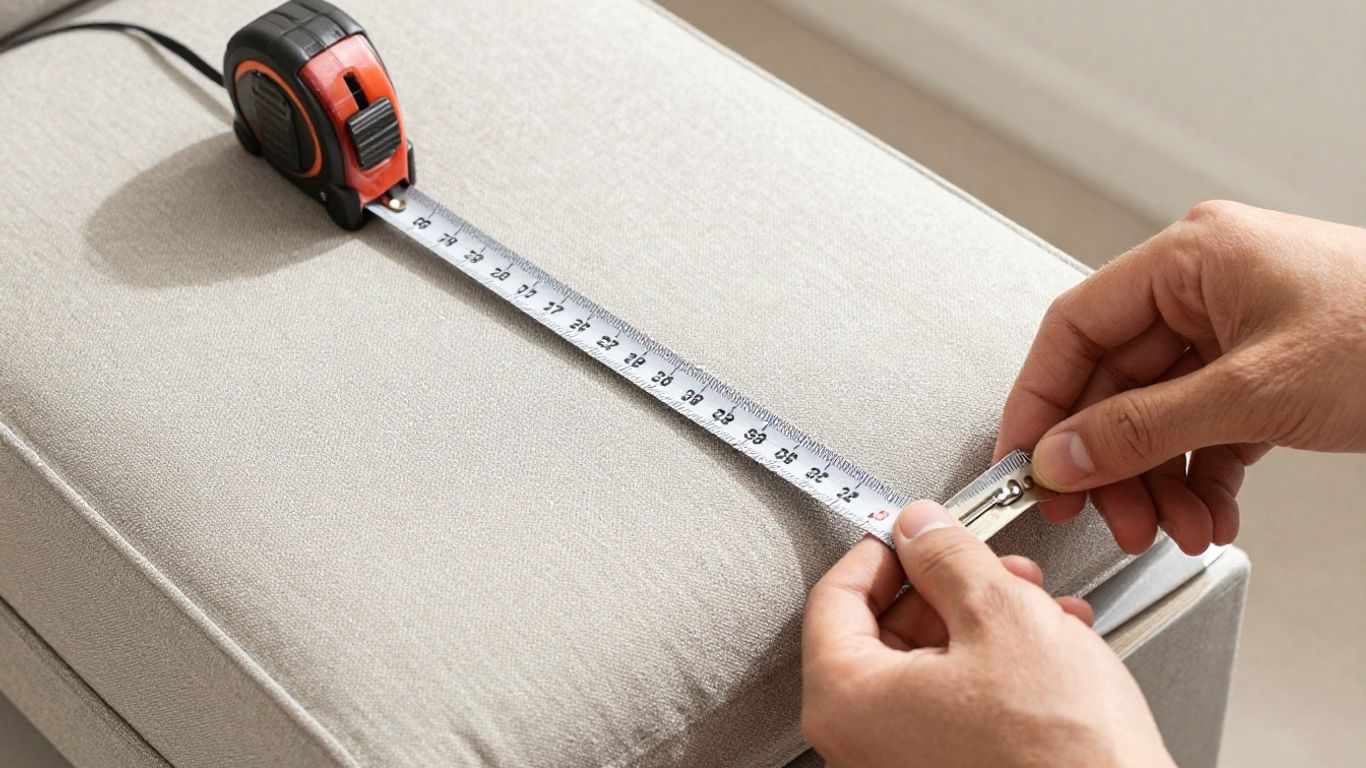
So, you’ve meticulously measured your furniture, accounted for curves, and maybe even tackled some tricky T-cushions. That’s fantastic! But before you hit that ‘order’ button, let’s do a quick final check. It’s like proofreading an important email – a little extra attention now saves headaches later.
Recording Additional Cushion Details
Beyond just the width, depth, and height, there are a few other bits of info that can be super helpful, especially if you’re ordering custom cushions or need to communicate specific needs. Think about:
- Fabric Type: While not a measurement, noting the fabric you plan to use (or the one on your current cushions if you’re matching) can sometimes influence how a cushion fits or wears.
- Seam Style: Are you going for a clean, modern look with a single seam, or do you prefer the look of piping or welting around the edges? This can slightly affect the final dimensions.
- Closure Type: If your cushion has a removable cover, how does it close? A zipper, ties, or Velcro? This usually doesn’t change the core measurements, but it’s good to keep in mind for the overall construction.
- Fill Material: Different fill types (like foam, fiberfill, or a blend) have varying levels of loft and compression. Knowing this helps set expectations for how the cushion will look and feel.
Double-Checking All Measurements
This is where you become your own quality control. Grab your notepad and your measuring tape one last time. Go through each cushion dimension you’ve recorded and compare it against the furniture piece again. It sounds tedious, but trust me, catching a small error now is way better than dealing with ill-fitting cushions.
- Width: Measure across the widest point of the seat or back frame. If it tapers, re-check both front and back widths.
- Depth: Measure from the very front edge of the seat frame straight back to where it meets the frame at the back.
- Height/Thickness: Measure the desired thickness. For back cushions, measure from the seat deck up to the top of the frame or where you want the cushion to end.
Always measure the furniture frame itself, not old cushions, as they can stretch or compress over time. This is the golden rule for getting a perfect fit every time. If you’re unsure about the condition of your furniture’s support system, like the webbing, it might be worth checking that out too. Sometimes, worn-out webbing can affect how a cushion sits. Repairing webbing is a project, but it can make a big difference.
It’s easy to get excited about new cushions and rush through the final steps. But taking a few extra minutes to confirm every number can prevent disappointment. Think of it as the final polish on a project you’ve worked hard on.
Considering Custom Cushion Options
Sometimes, even with the most careful measurements, you might find that standard cushion sizes just won’t cut it for your unique outdoor setup. This is where custom cushion services really shine. If you have an unusually shaped piece of furniture, like a built-in bench or a uniquely angled sectional, don’t hesitate to explore custom options. Many companies specialize in creating cushions to exact specifications, which can be a lifesaver for those hard-to-fit pieces. You can often find great resources for custom outdoor cushions that can be made to your precise dimensions, ensuring a truly bespoke fit for your patio.
Conclusion
Getting the right size cushions for your patio furniture can make a big difference in how your outdoor space looks and feels. By taking careful measurements of the furniture frame itself, rather than relying on old, worn cushions, you’ll ensure a snug and comfortable fit. Don’t forget to account for unique shapes like T-cushions or rounded corners. If you’re still unsure or have a particularly tricky piece, many companies offer custom cushion services. A little effort in measuring now means you’ll enjoy perfectly fitting, stylish cushions all season long.
Frequently Asked Questions
Why should I measure the furniture frame instead of my old cushions?
Old cushions can get squished over time, and their fabric might stretch out. Measuring the frame gives you the actual space your new cushion needs to fill, so it fits perfectly. It’s like measuring the inside of a box instead of a flattened-out one.
What tools do I need to measure my patio cushions?
You don’t need much! A good measuring tape is key – a stiff one works best for flat measurements. You’ll also want a notepad and a pen to write everything down so you don’t forget. A camera on your phone can be handy for taking pictures of tricky shapes.
How do I measure the width of a seat cushion?
For the width, you’ll measure straight across the seat, from one side to the other, usually where the arms are or across the widest part. If the seat gets narrower towards the back, measure both the front width and the back width.
What’s the best way to measure the depth of a seat cushion?
To measure the depth, start at the very back of the seat where the cushion touches the furniture frame and measure straight forward to the front edge of the seat. Try to keep the tape measure flat and level, not following any dips or curves in the seat.
How do I measure back cushions?
For back cushions, you’ll measure the width across where the cushion will sit, usually from arm to arm or between any side supports. Then, measure the height from the seat deck (where the seat cushion rests) all the way up to the top of the furniture’s back frame.
What if my furniture has a weird shape, like rounded corners or a T-cushion?
No problem! For rounded corners, measure the widest and deepest points and note the curve. For T-cushions, which extend forward around the arms, measure the main seat part first, then measure how far the ‘T’ part sticks out and its width. Taking a picture can really help show these unique shapes.